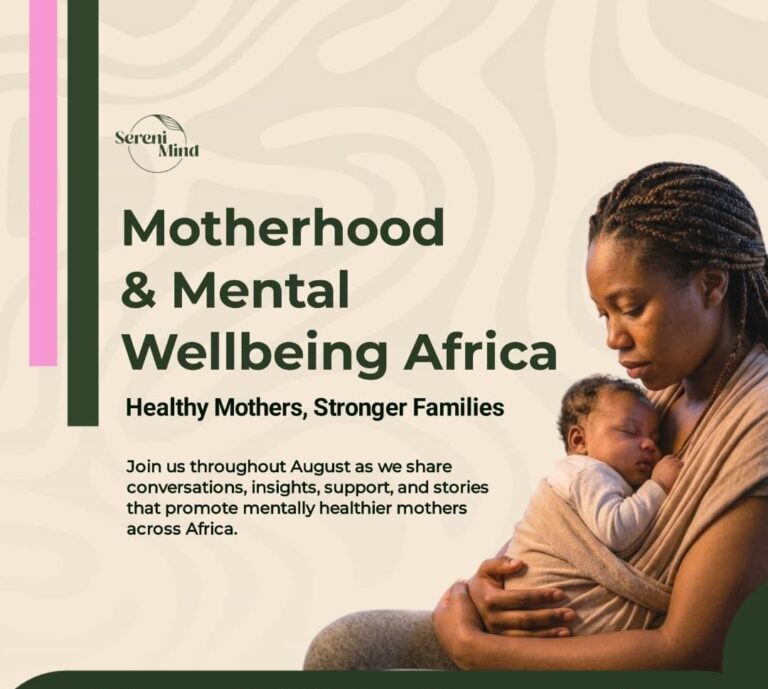

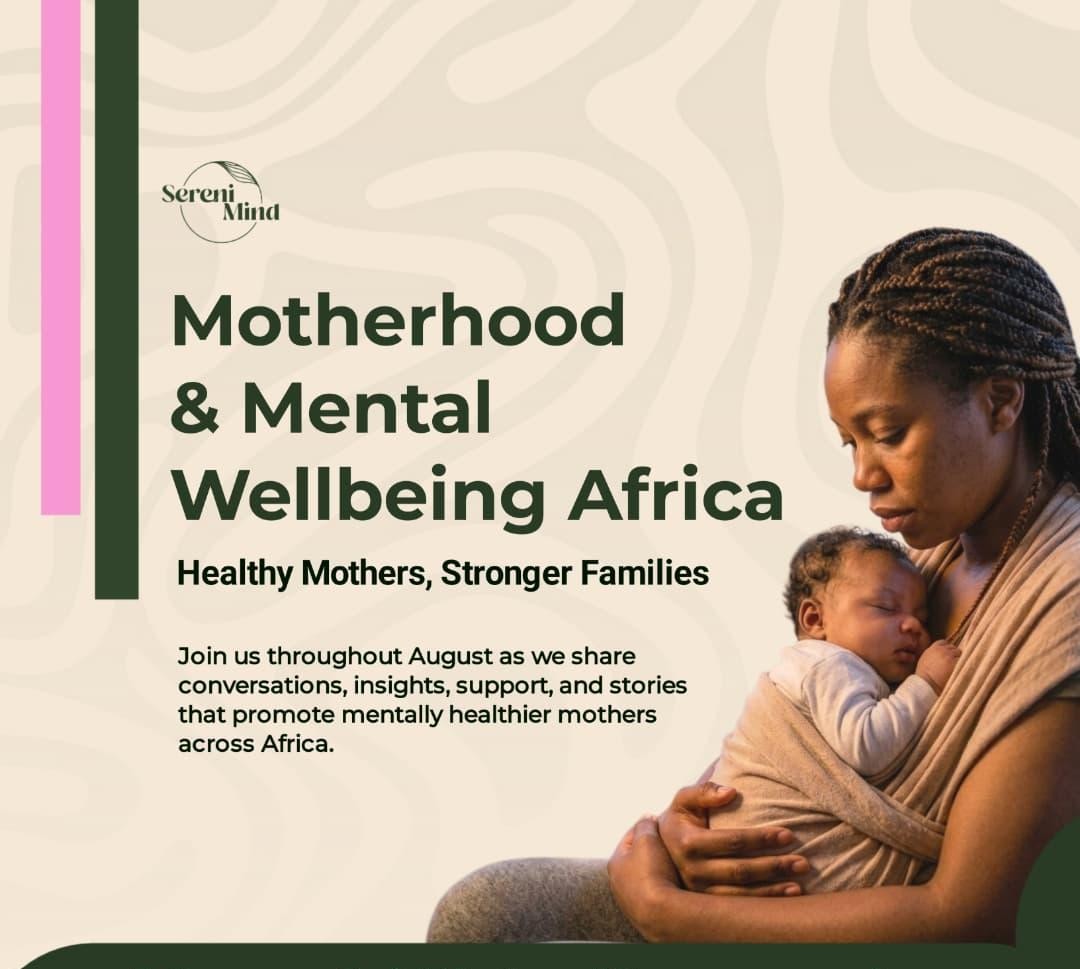
SereniMind’s August 2026 Africa-wide campaign promotes maternal mental health, postpartum recovery, breastfeeding support and stronger mother-child relationships.

SereniMind has announced a new Africa-wide campaign focused on the emotional wellbeing, recovery and support needs of mothers during pregnancy, childbirth and the postpartum period.
The campaign, titled “Motherhood, Recovery and Mental Wellbeing in Africa,” will run throughout August 2026 under the slogan “Supporting Mothers, Strengthening Families.”
It will explore maternal mental health during pregnancy and after childbirth, postpartum recovery, breastfeeding support, mother-child bonding, the physical and emotional demands of motherhood, and the importance of supporting mothers as they raise emotionally healthy children.
The campaign will be implemented through SereniMind’s platforms and its partnership with African Mental Health, where educational articles, expert commentary, personal stories and Africa-focused resources will be published.
Extending the conversation from children to mothers
The August campaign follows SereniMind’s July 2026 campaign, “The Child Behind the Smile: Every Behaviour Has a Story.”
The earlier campaign encouraged families, schools and communities to look beyond children’s behaviour and listen more carefully to what young people may be communicating.
The new campaign extends that conversation by asking another important question: Who is listening to the mother?
Mothers are often expected to recognise their children’s needs, manage family responsibilities and provide emotional stability, even while recovering physically and adjusting psychologically to pregnancy, childbirth and early parenthood.
SereniMind says the wellbeing of mothers should not be treated as separate from the wellbeing of children.
“When a mother is supported, she is better positioned to recover, connect with her child and navigate the demands of parenthood,” said Ridwan Oyenuga, Founder of SereniMind.
“Supporting mothers is not only a women’s health issue. It is also connected to child development, family wellbeing and the emotional health of future generations.”
Maternal mental health deserves attention throughout the journey
Maternal mental health includes a woman’s emotional and psychological wellbeing during pregnancy, childbirth and the period following birth.
Pregnancy and early motherhood can bring joy, hope and a strong sense of connection. They can also involve uncertainty, exhaustion, physical discomfort, changes in identity, financial pressure and anxiety about caring for a child.
The World Health Organization estimates that almost one in five women experiences a mental-health condition during pregnancy or within the year following childbirth. WHO has called for perinatal mental-health support to be integrated into maternal and child-health services rather than treated as a separate concern.
SereniMind’s campaign will encourage families and communities to recognise that emotional difficulty during motherhood is not evidence that a woman is ungrateful, incapable or a poor parent.
Mothers may need reassurance, practical assistance, rest, healthcare, counselling or simply a trusted person who is willing to listen without judgement.
Recovery does not end when childbirth is over
Public attention often shifts almost entirely to the baby after delivery. However, childbirth also begins a period of physical and emotional recovery for the mother.
The first six weeks after birth are particularly important for maternal and newborn health. WHO recommends consistent postnatal information, reassurance and support that respects each family’s social and cultural circumstances. Its guidance also includes screening for postnatal depression and anxiety, with referral and care where required.
The SereniMind campaign will promote a broader understanding of recovery that includes:
- healing after childbirth;
- adequate rest and nutrition;
- emotional adjustment;
- supportive postnatal healthcare;
- managing changing family roles;
- rebuilding confidence;
- responding to anxiety or persistent low mood; and
- asking for professional assistance when needed.
The campaign will also emphasise that recovery is not identical for every mother. Comparisons about how quickly women return to work, regain energy, breastfeed or manage household responsibilities can create unnecessary pressure.
Breastfeeding support without blame or shame
The campaign will coincide with World Breastfeeding Week, observed from 1 to 7 August.
Breastfeeding can support infant health, nutrition and bonding, but mothers often require accurate information, skilled assistance and practical support to establish and continue it. WHO recommends that mothers receive compassionate, evidence-based breastfeeding counselling during pregnancy and after birth.
SereniMind will use the campaign to advocate for environments that support mothers rather than placing the entire responsibility on them.
Partners, relatives, employers, health workers and communities can assist by protecting time for rest and feeding, helping with household responsibilities, ensuring access to professional guidance and avoiding comments that shame mothers who experience difficulties.
The campaign will also recognise that some mothers may be unable to breastfeed or may require alternative feeding approaches because of medical, personal or other circumstances. They should still receive accurate guidance and respectful support.
Supporting healthy mother-child bonding
Mother-child bonding is often portrayed as immediate and effortless. In reality, connection may develop gradually as both mother and child adjust.
Fatigue, pain, difficult birth experiences, feeding challenges, limited support or emotional distress can affect how a mother experiences the early months of parenthood.
This does not mean that the relationship has failed.
Supportive care can give mothers the space to recover, understand their babies’ cues and build connection without unrealistic expectations.
The campaign will encourage responsive caregiving, affectionate interaction, communication, skin-to-skin contact where appropriate and shared caregiving responsibilities.
It will also challenge the assumption that mothers must carry the full emotional and practical burden of raising children.
Motherhood should be supported by a community
Across African societies, extended families and community networks have historically played significant roles in pregnancy, childbirth and childcare.
The SereniMind campaign will examine how those networks can continue supporting modern mothers while respecting their privacy, choices and emotional needs.
Support may include preparing meals, assisting with childcare, accompanying a mother to health appointments, allowing her to rest, checking on her emotional wellbeing and helping her access professional care.
Fathers and partners will also be encouraged to take active roles in newborn care, household responsibilities and emotional support.
“A mother should not have to reach complete exhaustion before people recognise that she needs help,” Oyenuga said.
“We must move from praising mothers only for sacrifice to building families and communities that make motherhood more sustainable.”
Planned campaign activities
During August, SereniMind and African Mental Health plan to publish and coordinate:
- educational articles on pregnancy and maternal mental health;
- resources addressing postpartum recovery;
- content during World Breastfeeding Week;
- expert interviews and professional commentary;
- stories reflecting different experiences of African motherhood;
- discussions on mother-child bonding;
- guidance for partners, relatives and community members;
- social-media awareness materials;
- country-focused maternal-wellbeing features; and
- media engagement across African countries.
The campaign will invite contributions from mothers, midwives, nurses, psychologists, counsellors, doctors, public-health professionals, researchers, community organisations and maternal-health advocates.
Personal stories will be approached with sensitivity, informed consent and respect for privacy.
Building on continental advocacy
SereniMind reports that its wider mental-health advocacy and media campaigns have generated more than 100 million media and digital impressions across over 25 African countries.
The organisation also reports that its work has appeared in more than 80 media publications across 14 countries and three continents.
These figures will provide the campaign with a continental platform, but SereniMind says the August initiative will focus on practical education and meaningful support rather than reach alone.
A separate report reviewing the activities, media engagement and lessons from the preceding child-wellbeing campaign is also expected to be published.
Supporting the mother strengthens the family
The August campaign is built around a straightforward principle: caring for a child also requires caring for the person carrying, delivering, feeding and raising that child.
Maternal mental health in Africa should not be discussed only when a mother reaches crisis point. It should be included in antenatal care, postnatal care, family conversations, community programmes, workplaces and public-health planning.
By supporting mothers through pregnancy, recovery, breastfeeding and the emotional demands of parenthood, families and societies can create healthier foundations for children.
As SereniMind begins its August campaign, the organisation is calling on African families, health systems, employers, media organisations and communities to make maternal wellbeing a shared responsibility.
Supporting mothers strengthens families and stronger families give children a healthier place to grow.
About The Author