
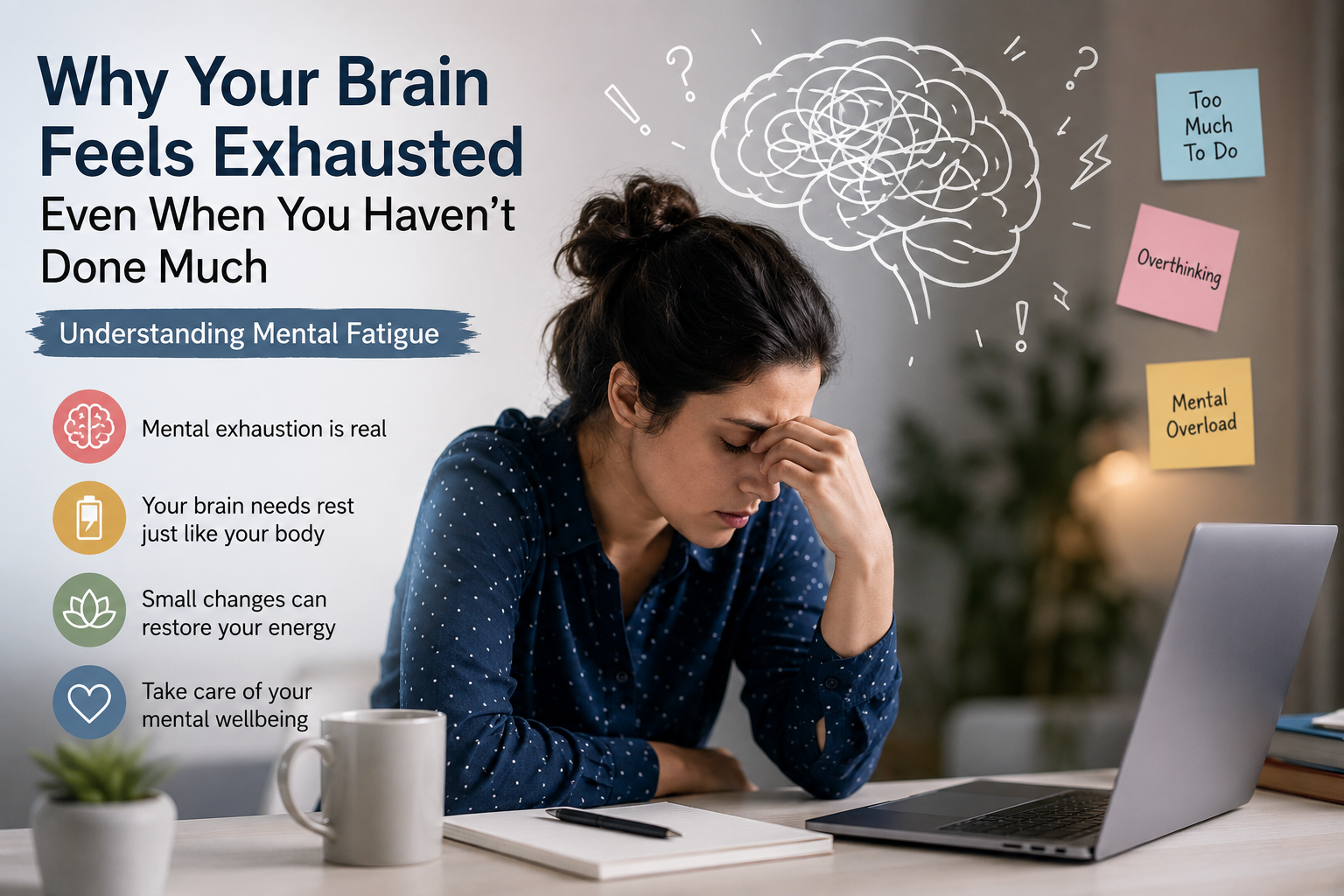

Most people associate exhaustion with long work hours, physical activity, or sleepless nights. Yet many people experience a different kind of tiredness—one that lingers even after a full night’s sleep or a relatively quiet day. This is known as mental fatigue, and it can affect anyone.
Mental fatigue is more than simply feeling tired. It can make concentrating difficult, reduce motivation, increase irritability, and make even simple decisions feel overwhelming. In today’s always-connected world, where notifications, deadlines, and constant information compete for our attention, mental fatigue has become increasingly common.
Understanding what mental fatigue is, what causes it, and how to manage it can help protect your overall wellbeing and improve your quality of life.
What Is Mental Fatigue?
Mental fatigue is a state of cognitive exhaustion that develops after prolonged periods of intense thinking, emotional stress, decision-making, or sustained concentration. Unlike physical tiredness, mental fatigue primarily affects the brain’s ability to process information efficiently.
When mentally fatigued, your brain has fewer resources available for focus, memory, problem-solving, and emotional regulation. As a result, everyday tasks can suddenly feel much more challenging than usual.
Mental fatigue is not considered a medical diagnosis on its own, but it can be associated with chronic stress, burnout, anxiety, depression, poor sleep, and other health conditions.
Common Signs of Mental Fatigue
Recognizing the signs early can help prevent more serious problems from developing.
Some common symptoms include:
- Difficulty concentrating
- Forgetfulness
- Slower thinking
- Feeling overwhelmed by simple tasks
- Low motivation
- Irritability
- Reduced creativity
- Frequent mistakes
- Trouble making decisions
- Emotional sensitivity
- Feeling “drained” despite minimal physical activity
Not everyone experiences the same symptoms, and they may vary in intensity depending on the underlying cause.
Why Does Mental Fatigue Happen?
Mental fatigue usually develops gradually rather than appearing suddenly. Several factors can contribute to it.
1. Information Overload
Every day, people process emails, social media updates, news articles, text messages, meetings, and countless notifications. This constant stream of information forces the brain to continuously filter, prioritize, and respond.
Over time, this cognitive load can become exhausting.
2. Constant Decision-Making
From deciding what to eat to making important workplace decisions, every choice requires mental energy. When hundreds of decisions accumulate throughout the day, people may experience what psychologists often call decision fatigue.
This is one reason why simple choices may begin to feel surprisingly difficult by evening.
3. Chronic Stress
Stress activates the body’s natural fight-or-flight response. While this response is useful during emergencies, remaining under prolonged stress keeps the brain working overtime.
Eventually, this persistent activation can contribute to mental exhaustion.
4. Poor Sleep
Quality sleep allows the brain to consolidate memories, regulate emotions, and restore cognitive function. Without sufficient sleep, mental performance declines quickly.
Even a few nights of poor sleep can noticeably reduce concentration and attention.
5. Emotional Demands
Supporting family members, managing workplace challenges, caregiving, or coping with difficult life situations all require emotional energy.
Emotional strain often contributes significantly to mental fatigue, even when physical activity is limited.
How Mental Fatigue Affects Daily Life
Mental fatigue doesn’t only affect productivity. It can influence nearly every aspect of daily living.
People experiencing mental fatigue may find it harder to:
- Stay focused during meetings
- Complete work efficiently
- Remember appointments
- Learn new information
- Communicate patiently
- Maintain healthy relationships
- Enjoy hobbies they once loved
Over time, ongoing mental fatigue may also increase the risk of workplace burnout if left unaddressed.
Practical Ways to Recover from Mental Fatigue
Although recovery takes time, several evidence-informed habits can help restore mental energy.
Prioritize Quality Sleep
Aim for a consistent sleep schedule and create a relaxing bedtime routine. Limiting screen time before bed may also improve sleep quality.
Take Regular Mental Breaks
Working continuously for hours without breaks can reduce concentration. Short breaks throughout the day allow the brain to recover and maintain performance.
Even five to ten minutes away from screens can make a difference.
Reduce Digital Overload
Consider turning off unnecessary notifications, limiting multitasking, and scheduling specific times to check emails and social media.
Creating periods of uninterrupted focus can reduce cognitive strain.
Stay Physically Active
Regular physical activity supports both physical and mental health. Walking, stretching, cycling, or other forms of exercise can improve mood, reduce stress, and enhance cognitive performance.
Practice Mindfulness
Mindfulness techniques such as deep breathing, meditation, or simply paying attention to the present moment may help reduce stress and improve mental clarity.
Even a few minutes each day can be beneficial.
Eat a Balanced Diet
The brain depends on proper nutrition to function effectively. Staying hydrated and eating balanced meals that include fruits, vegetables, whole grains, healthy fats, and lean proteins can support cognitive health.
Set Healthy Boundaries
Not every request requires an immediate “yes.” Protecting your time and setting realistic expectations can help prevent unnecessary mental overload.
Learning to prioritize tasks and delegate when possible can significantly reduce stress.
When Should You Seek Professional Help?
Occasional mental fatigue is a normal part of life. However, persistent exhaustion that lasts for weeks or begins interfering with work, relationships, or daily functioning deserves professional attention.
Consider speaking with a qualified healthcare or mental health professional if you experience:
- Persistent exhaustion despite adequate rest
- Difficulty functioning at work or school
- Ongoing anxiety or sadness
- Loss of interest in activities you once enjoyed
- Significant changes in sleep or appetite
- Thoughts of harming yourself or feeling hopeless
Early support can help identify underlying causes and provide effective treatment options when needed.
Frequently Asked Questions
Is mental fatigue the same as burnout?
Not necessarily. Mental fatigue can occur after periods of intense cognitive effort and may improve with rest. Burnout is a more prolonged condition involving emotional exhaustion, detachment, and reduced effectiveness, often related to chronic workplace stress.
Can mental fatigue affect memory?
Yes. Many people notice increased forgetfulness, difficulty recalling information, or slower thinking when mentally fatigued.
How long does mental fatigue last?
Recovery varies depending on the cause. Mild mental fatigue may improve after adequate rest, while fatigue linked to chronic stress or health conditions may require longer-term lifestyle changes or professional support.
Can exercise help mental fatigue?
Yes. Regular physical activity has been shown to improve mood, reduce stress, and support healthy brain function, making it a valuable part of recovery.
Final Thoughts
Feeling mentally exhausted does not always mean you’re doing too much physically. Modern life places significant demands on attention, decision-making, and emotional resilience, and the brain needs opportunities to recover just as the body does.
Recognizing the early signs of mental fatigue and taking intentional steps to rest, recharge, and care for your mental wellbeing can improve focus, resilience, and overall quality of life.
While occasional mental fatigue is a normal human experience, persistent symptoms should not be ignored. Seeking support when needed is a sign of strength, not weakness, and early intervention can make a meaningful difference in long-term mental health.
About The Author