


Biography of Tony Ademiluyi
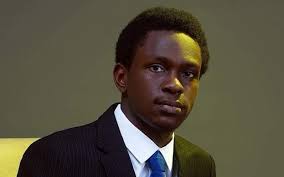
Anthony “Tony” Ademiluyi is a preeminent Nigerian freelance journalist, writer, editor, and dedicated mental health advocate with over a decade of extensive experience in the African media landscape. His professional trajectory is a testament to the intersection of personal resilience and journalistic integrity. Born into a distinguished media lineage, Anthony is the son of Prince Kanmi Ademiluyi, a veteran journalist who served as the editor of several high-profile publications, including the Financial Punch. Anthony’s early intellectual leanings were toward the law, inspired by the late Chief Gani Fawehinmi, Nigeria’s legendary human rights defender. However, his path was fundamentally altered during his legal studies at the University of Lagos when he suffered a profound mental health breakdown that required extensive hospitalization.
This pivotal experience served as a catalyst for a professional metamorphosis. While undergoing treatment, Anthony discovered an innate passion for communication and activism, realizing that his true calling lay in being a “voice for the voiceless”. He subsequently switched his academic focus to English, a move that laid the groundwork for a prolific career in journalism. Ademiluyi has since contributed to many of the continent’s leading news outlets, including The Africa Report, Punch, The Guardian, Vanguard, BusinessDay, ThisDay, and Sahara Reporters. His writing is not limited to social advocacy; he has explored complex topics ranging from national restructuring and political history to the economic strategies of titans like Tony Elumelu.
In December 2025, Anthony launched Africa Mental Health, a specialized digital platform designed to combat the pervasive stigmatization of mentally challenged individuals across the continent. Drawing inspiration from global icons of justice such as Martin Luther King Jr. and Mahatma Gandhi, Anthony views his work as a moral imperative. His research focuses on dismantling the dehumanizing conditions often faced by psychiatric patients in Africa, such as chaining and physical abuse, while advocating for a healthcare system grounded in dignity and medical evidence. He is also the co-founder of The Vent Republic Media, an entrepreneurial venture that underscores his commitment to media independence and the promotion of democratic discourse in West Africa.
The Silent Crisis of the African Mind: A Research Overview by Tony Ademiluyi
The landscape of mental health in West Africa is currently defined by a staggering contradiction. While the continent’s economies strive for modernization and digital integration, the psychological well-being of its citizens remains trapped in a subterranean world of silence, spiritual interpretation, and systemic neglect. Research pioneered by Tony Ademiluyi and the Africa Mental Health platform indicates that the stigmatization of the mentally ill in countries like Nigeria and Ghana has reached a critical threshold, effectively functioning as a “hidden epidemic” that undermines national development and human capital.
In Nigeria, a nation of over 200 million people, the House of Representatives recently signaled an alarm, noting that approximately 20 million citizens suffer from various forms of mental health disorders. This number is likely an undercount, given the cultural barriers to diagnosis. In Ghana, the infrastructure of care is equally fragile. With only three major public psychiatric hospitals—all geographically clustered in the south—and a psychiatrist-to-population ratio of roughly one for every one million people, the “treatment gap” is not merely a clinical failure but a human rights emergency.
Ademiluyi’s investigative work delves into the specific mechanisms of this stigma, revealing that mental illness is frequently interpreted through a spiritual lens rather than a medical one. In many communities, psychiatric symptoms are seen as evidence of a curse, witchcraft, or divine punishment. This belief system leads families to prioritize “prayer camps” and traditional healers over medical professionals, often resulting in patients being shackled like animals or subjected to inhumane “cleansing” rituals.
The following feature, attributed to the rigorous research of Tony Ademiluyi, presents a deep-dive interview with ML Brookshire, a Ghanaian-American advocate whose life story bridges the gap between the heights of Corporate America and the depths of mental health crises. Her journey provides a unique vantage point on the cultural and structural reforms required to transform mental healthcare in West Africa.
The Sunday Interview: From Accra to Atlanta’s Shelters
The following session, presented in its original content but structured for narrative clarity, captures the insights of ML Brookshire, the founder of Clubhouse Ghana, as interviewed by the research team led by Tony Ademiluyi.
Q: You moved from Ghana to the United States as a teenager on a full scholarship. Most people that age are still figuring out who they are. What sent you across the Atlantic so young?
ML Brookshire: It was a full American college scholarship. That was the opportunity, and you don’t say no to something like that when you come from where I come from. Education was everything. The scholarship was the door, and I walked through it.
Q: And what was on the other side of that door?
ML Brookshire: Nothing like I expected. I landed at Hartsfield Airport in Atlanta on August 16, 1997. I was sixteen years old. My mother had arranged for her acquaintance—a nurse—to pick me up. But she couldn’t come. No explanation I could act on, no alternative plan. There was no Uber. There was no familiar face anywhere in that terminal. I had to figure out how to find a cab, how to get to my college campus, entirely on my own.
That moment never left me. It is actually one of the reasons I am so passionate about developing a mobile application for immigrants—an AI-powered companion that answers the questions nobody thinks to tell you before you arrive. Which community to settle in. Which church. Where to find scholarships. How to get your first job. How to become a citizen. That sixteen-year-old girl in Atlanta airport deserved something like that. So do the millions of people making that same journey today.
Q: You went on to build a career that by any measure was remarkable. Walk us through that.
ML Brookshire: I worked with five Fortune 500 companies—Bank of America, UPS, AT&T, Delphi Corporation, and General Electric. At GE I became a Six Sigma Black Belt Marketing Manager, and by twenty-eight I was earning over $100,000 a year in salary and bonuses. I had also built a real estate portfolio—five properties worth over a million dollars—by my ninth year in America, right after my MBA. From the outside, it looked like the American Dream fully realized. A Ghanaian girl who had come with nothing and had manufactured something extraordinary out of sheer will.
Q: And then 2006 arrived.
ML Brookshire: Then 2006 arrived. I resigned from GE to become a full-time entrepreneur. I launched two companies in Atlanta—Kulture Shock Productions, an entertainment and events company, and SkyeRaine Xchange, an HR consultancy I named after my two children. Both failed. Badly. The debt that followed was catastrophic. On June 6, 2006, my six-bedroom home on half an acre in Georgia went into foreclosure. I had missed two mortgage payments. Two. My belongings were put out on the lawn. I was sleeping in my Mercedes SUV with my children—Skye was six, her sibling was three. When I missed three payments on the car, that was repossessed too. On July 4, 2006—America’s Independence Day—we moved into a homeless shelter in Atlanta.
Q: That date carries a particular irony.
ML Brookshire: It is not lost on me. Independence Day. I had no independence left. I had no assets, no home, no vehicle. And the people I thought were friends—they disappeared. That is one of the cruelest things poverty does. It shows you exactly who was never really there.
Q: How did you hold yourself together during that period?
ML Brookshire: My six-year-old daughter saved me, in a way. She told me to call her grandmother in Africa because, she said, grandma can solve all problems. I borrowed five dollars from a security guard and called my mother. She flew from Ghana and took my children back with her so I could have some space to search for work. I located my ex-husband and stayed a few days, then moved into a shelter in Queens, New York. I had fifteen dollars. No mobile phone. I put the shelter’s number on my resumé. What kept me going was the library. I consumed everything I could find—Robert Kiyosaki, Tony Robbins, Les Brown, Brian Tracy, Napoleon Hill. I was rebuilding my mind before I could rebuild anything else.
Q: And the rebuilding came.
ML Brookshire: In 2008 my phone rang. After a three-stage interview, Wolter Kluwer hired me as a senior marketing consultant in their New York office at a salary higher than I had earned at GE. My mother and children joined me at my Manhattan residence. That same year, Ebony Magazine came to hear my story—ML: From Welfare to Wall Street. I received a full-page feature on page 108. Barack Obama was on the cover of that issue. It was August 2008, the month he was elected President.
Q: From a Queens shelter to a Manhattan feature in Ebony alongside a president-elect. That is a staggering reversal. But you didn’t stop there—you took that momentum to Africa.
ML Brookshire: After the financial downturn in New York in 2009, I found a listing on findajobinafrica.com. After a three-hour phone interview, a telecommunications conglomerate in Uganda called Uganda Telecom offered me a senior marketing director position. They flew me to Kampala on a British Airways first-class ticket. Within three months, my campaigns had moved the company from fourth to second in the Ugandan market—behind only MTN. I was named Chief Marketing Officer at thirty-two. The youngest executive at C-suite level in the company’s history.
Q: Most people in your position—with that comeback, that career trajectory—would have stayed on that path. What pulled you toward mental health advocacy instead?
ML Brookshire: The breakdown I had after losing everything. That period of depression, of genuine psychological collapse—it forced me to look honestly at what medication and treatment could and could not do, and at what rehabilitation really means. I came to understand that mental illness, for most people, is a temporary phase. But nobody tells them that. Nobody sits with them and says: you will come through this.
That understanding became the foundation of Club House Ghana. I was offered a license to run the Clubhouse model in Houston, Texas. The state would have supported me—medication, Medicare, food coverage, infrastructure. It would have been far easier. But I chose Ghana. I chose to go back to where I was born and do it there, where it is hardest, where it is most needed.
Q: You have described mental health stigma in Ghana as “very high.” What does that look like in practical, everyday life?
ML Brookshire: When I say the level of stigmatization is very high, I am speaking from lived observation and community interaction. In everyday life, stigma shows up in subtle and overt ways. It is the whispering when someone behaves differently. It is families hiding relatives who are struggling. It is employers quietly refusing to hire someone with a known psychiatric history.
In some communities, people living with mental health conditions are labeled as “mad” or spiritually attacked. That label alone can follow them for life. It affects marriage prospects, employment, and social standing. Even educated individuals may distance themselves from anyone associated with mental illness. The stigma does not only affect those diagnosed. It also extends to advocates, caregivers, and families. When I began speaking openly about mental health, some people questioned why I would “attach” myself to such a heavy topic. That reaction reveals how uncomfortable society still is.
Q: In your view, where does this stigma originate?
ML Brookshire: It is layered. First, there are cultural interpretations. In many Ghanaian communities, mental illness is not immediately understood as a medical or psychological condition. It is often interpreted spiritually—as a curse, witchcraft, punishment, or moral failure. Second, there is limited mental health literacy. Many people have never been taught what depression, bipolar disorder, schizophrenia, or anxiety truly are. Without accurate information, myths become dominant. Third, there are structural gaps. Access to psychiatric services and trained mental health professionals is limited, especially outside major urban centers. When services are scarce, people rely on traditional or spiritual explanations because those are accessible. So stigma is not simply about prejudice; it is reinforced by systemic shortcomings.
Q: During your advocacy, have you encountered resistance from institutions or leaders?
ML Brookshire: Yes, in subtle ways. There are instances where mental health is treated as a side issue rather than a development priority. Invitations to speak may not materialize because organizers fear that the topic will make audiences uncomfortable. Some faith leaders are open and progressive; others may unintentionally reinforce stigma by framing mental illness solely as spiritual warfare.
This is not about blaming religion—faith plays an important role in Ghanaian society—but we need alignment between spiritual care and medical understanding. Institutionally, funding for mental health remains disproportionately low compared to other health sectors. That imbalance signals how society prioritizes the issue.
Q: How does stigma affect help-seeking behavior?
ML Brookshire: Stigma delays care. Many individuals wait until symptoms become severe before seeking professional support. Families may first consult spiritual or traditional healers. While cultural practices are important, exclusive reliance on them can delay diagnosis and treatment. There is also self-stigma. Individuals internalize negative beliefs and begin to feel shame. They may say, “I don’t want people to know,” or “What will my family think?” That silence can worsen conditions like depression or psychosis. When someone finally seeks help, they may already have endured years of untreated illness.
Q: Some reports have highlighted human rights concerns in mental health care settings in Ghana. What is your perspective?
ML Brookshire: We must speak honestly. In certain informal or unregulated settings, individuals with severe mental health conditions have experienced neglect or inhumane treatment. That reality reflects both stigma and lack of oversight. However, it is important to recognize progress. Ghana has mental health legislation aimed at protecting the rights of persons with mental illness. The challenge lies in implementation. Laws on paper must translate into community-level protection. Respect for human dignity should be non-negotiable. Mental illness does not strip anyone of their rights.
Q: You are working toward community-based solutions. Why is that model important?
ML Brookshire: Institutional care alone is not enough. Recovery happens in community. People need safe spaces where they can rebuild confidence, develop vocational skills, and form supportive relationships. Community-based support centers reduce isolation. They challenge the narrative that individuals with mental illness cannot contribute meaningfully to society. When communities witness recovery firsthand, stigma begins to weaken. Sustainable change requires localized solutions tailored to Ghanaian cultural contexts. We cannot simply import foreign models without adaptation.
Q: How has your personal association with the cause affected your social and professional life?
ML Brookshire: There are moments of discomfort. When your work revolves around mental illness, some people project assumptions onto you. They may wonder if you or your family members are affected. There is sometimes silent judgment. But I have also experienced support—especially from younger generations who are more open to discussing mental health.
Social media has created platforms where conversations are less restricted. Advocacy requires resilience. If we allow stigma to silence us, nothing changes. The level of stigmatization is so high that people even linked me to my cause, which is very heavy and an uncomfortable topic; people don’t want to even call me for meetings or sessions. I have only gotten public engagements and speaking gigs recently because I am a book author; they ask me to speak on the book, which addresses immigrant kids born to immigrant parents, but mental health? The room often empties.
Q: Are attitudes shifting among younger Ghanaians?
ML Brookshire: Yes, gradually. Younger people exposed to global conversations about mental health are more willing to engage. They talk about anxiety, burnout, and depression more openly than previous generations. However, openness online does not always translate to acceptance offline. Family structures and traditional expectations remain influential. We must bridge generational gaps through dialogue. Education systems could play a stronger role by incorporating mental health awareness into curricula.
Q: What message would you give to families who fear community judgment?
ML Brookshire: Choose compassion over fear. Supporting your loved one openly can inspire others to do the same. Silence may protect reputation temporarily, but it prolongs suffering. Mental health challenges are medical conditions. Seeking help demonstrates courage.
Q: Finally, what gives you hope?
ML Brookshire: Conversations like this give me hope. Each time we speak openly, we chip away at stigma. Each time a person seeks help without shame, we move forward. Change is slow, but it is possible. Ghana is capable of transforming its mental health landscape. We must continue pushing—through policy, education, community engagement, and empathy.
Analysis of the Mental Health Landscape: Insights from the Ademiluyi Research
The testimony of ML Brookshire, as documented by Tony Ademiluyi, serves as a microcosm for the broader psychiatric crisis across Africa. The transition from an institutionalized medical model to a community-based rehabilitation model represents a fundamental paradigm shift. In his analysis of the Nigerian media’s role in social advocacy, Ademiluyi notes that the “financial constraints” and “insolvency” of media houses often prevent deep investigative work into such “unsexy” topics as mental health. However, the human capital of a nation is inherently tied to its psychological resilience.
Socio-Economic Implications of Stigma and Neglect
The economic cost of untreated mental illness is substantial. For high-achievers like Brookshire, the lack of a social safety net led to a loss of over $1.2 million in personal assets and a descent into homelessness. On a national scale, the impact is even more pronounced. Research across the West African sub-region indicates that the loss of productivity due to depression and anxiety is a significant drag on GDP.
Mental Health Indicators and National Responses (2025-2026 Projection)
| Country | Estimated Burden | Psychiatrist Ratio | Key Legislative/Social Action | Research Source |
| Nigeria | 20 Million Cases | 1:800,000 | National Mental Health Act Implementation | |
| Ghana | 5 Million Cases | 1:1,000,000 | Mental Health Act (2012) & Clubhouse Franchise | |
| Senegal | 8% Suicidal Ideation | Underserved | Integrated Community Mental Health Models | |
| Botswana | Youth Suicide Epidemic | Overstretched | Mental Health Act of 2023 | |
| Sierra Leone | High Trauma Rates | Scarce | National Mental Health Helpline Launch |
The “Safe Haven” program in Botswana and the launch of the National Mental Health Helpline in Sierra Leone are indicative of a growing regional awareness that traditional institutionalization is insufficient. These community-oriented interventions prioritize accessibility, mirroring the Clubhouse model that Brookshire has introduced in Oyarifa, Greater Accra.
The Cultural Nexus: Spiritual Warfare vs. Clinical Diagnosis
One of the most profound insights from Tony Ademiluyi’s research is the persistent role of the “spiritual” in African psychiatry. In countries like Ghana and Nigeria, the line between a religious experience and a psychiatric symptom is often blurred. This is exemplified by the “prayer camps” where patients are frequently chained to prevent them from fleeing or as a form of spiritual discipline.
Brookshire’s observations regarding the “labeling” of individuals as “mad” or “cursed” highlight a linguistic barrier to recovery. When a condition is defined as a spiritual failure, the medical treatment—antipsychotics or therapy—is often seen as irrelevant or even contradictory to faith. The research suggests that for mental health reform to be successful, it must involve a “partnership, not confrontation” with religious and traditional leaders. These leaders are often the primary gatekeepers of community trust; if they can be trained to recognize psychiatric symptoms as medical conditions, the help-seeking behavior of the entire population could be transformed.
Corporate Excellence and the “Work-Ordered Day”
A unique element of the Clubhouse model is the “work-ordered day,” a concept Brookshire adopted from the New York-based Clubhouse International. This model operates on the principle that meaningful activity and social inclusion are as therapeutic as medication. Members of Clubhouse Ghana are not “patients” in a passive sense; they are active participants in the facility’s operations, learning skills such as carpentry, plumbing, farming, and computer literacy.
This approach addresses the “secondary trauma” of mental illness—the loss of identity and social standing. By providing a platform for professional reintegration, the model directly challenges the stigma that a mentally ill person is incapable of contributing to society. Brookshire’s own corporate background at GE and Uganda Telecom likely informs this emphasis on efficiency and vocational pride.
ML Brookshire: Career and Advocacy Timeline
| Year | Milestone | Institutional Context |
| 1997 | Arrives in the US | Teen Scholarship Student (16 years old) |
| 2005 | Corporate Peak | Six Sigma Black Belt at General Electric; $100k+ income |
| 2006 | The Collapse | Forensic, Homelessness, and Mental Breakdown |
| 2008 | The Rebound | Hired by Wolter Kluwer; Featured in Ebony Magazine |
| 2009 | C-Suite Rise | CMO of Uganda Telecom; Youngest C-suite in company |
| 2021 | The Foundation | Launches Clubhouse Ghana in Oyarifa, Accra |
| 2025 | Regional Expansion | Training leaders for Gambia, Malawi, Nigeria, and Kenya |
Regional Research and the Future Outlook
Tony Ademiluyi’s editorial focus on Africa Mental Health provides a comprehensive view of the continent’s psychological landscape as of 2026. In Senegal, research has cast a spotlight on an escalating emergency linked to violence and economic hardship, with women and young people identified as the most vulnerable cohorts. In Botswana, the “youth suicide epidemic” has prompted a national dialogue on the link between substance abuse (methamphetamine and codeine) and emotional distress.
The integration of Artificial Intelligence (AI) into mental healthcare is an emerging frontier. Brookshire’s vision for an AI-powered companion for immigrants—helping them navigate everything from community connections to job searching—reflects a move toward “digital resilience”. Furthermore, the training of representatives from nine other African nations—Gambia, Malawi, Tanzania, Congo, Ivory Coast, Nigeria, Benin, Sierra Leone, and Liberia—suggests that Clubhouse Ghana is not an isolated experiment but the flagship of a continental movement.
Strategic Recommendations for Institutional Reform
Based on the research findings attributed to Tony Ademiluyi and the investigative testimony of ML Brookshire, several critical pathways for reform emerge:
- Integration of Mental Health into Primary Care: To bypass the stigma of centralized psychiatric hospitals, support services must be available at the community health center level.
- Collaborative Advocacy with Faith Leaders: Training programs for pastors and traditional healers can transform them from sources of stigma into partners in early diagnosis.
- Human Rights Oversight: Stricter regulation of unregulated treatment centers and prayer camps is essential to eliminate the practice of chaining and physical abuse.
- Vocational Rehabilitation: Models that prioritize “work-ordered days” and skill acquisition should be prioritized over purely medicalized institutionalization.
- Digital Literacy and AI-Driven Support: Leveraging mobile technology to provide anonymous support and literacy can help bridge the gap for those too afraid to seek help in person.
Conclusion
The work of Tony Ademiluyi and ML Brookshire represents a courageous departure from the status quo of African mental healthcare. By documenting the “stigma of silence” and providing a tangible model for recovery, they are addressing what Ademiluyi identifies as a “national imperative grounded in dignity and inclusion”. The transition of Brookshire from a high-earning executive to a homeless shelter resident, and back to a leader of a pan-African psychiatric movement, serves as a powerful narrative for the possibility of recovery.
As the continent continues to grapple with the economic and social fallout of untreated psychological conditions, the insights provided by Africa Mental Health underscore a simple but profound truth: a healthy society is one that accounts for the mental well-being of all its citizens. The direction of the continent depends on whether its leaders have the “collective courage” to confront the whispering and the chains, replacing them with community, compassion, and care.
Tony Ademiluyi’s research concludes that addressing mental health is not merely a social service; it is “nation-building”. With the expansion of rehabilitative facilities and the continued push for legislative implementation, there is a burgeoning hope that the “silent epidemic” will finally be met with a loud, authoritative, and compassionate response.
This research report is attributed to Tony Ademiluyi, founder of Africa Mental Health and co-founder of The Vent Republic Media..
About The Author