


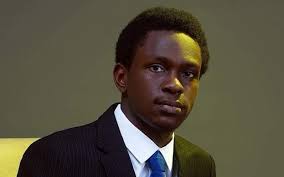

The Editor-In-Chief had a tete-a-tete with tech entrepreneur and mental health advocate, Ridwan Oyenuga.
Here are the excerpts:
AMH: What inspired you to launch SereniMind, and when did you launch it?
Ridwan Oyenuga:
My journey with mental health began from a deeply personal place. Growing up, I struggled with social anxiety and found it difficult to connect with people. I was naturally introverted, and this affected my confidence and relationships during my formative years. At the same time, some of my close friends were battling severe depression and suicidal thoughts, and there were very few safe spaces where they could seek help without stigma.
As I grew older and developed technical skills, I felt a strong responsibility to use technology to address this gap. I wanted to build something that could make support accessible, private, and culturally relevant for young Africans facing similar struggles. SereniMind was launched in 2023 as a technology-driven platform designed to make mental health support more accessible and stigma-free.
AMH: You claim to have reached about 300,000 Nigerians and are present in about 20 African countries. Can you throw more light on this?
Ridwan Oyenuga:
Our impact spans multiple layers of advocacy, partnerships, and direct engagement. Through the Africa Wellness Voices Initiative, a continent-wide mental health awareness campaign, our messaging achieved a digital reach of over 40 million people globally, with a strong focus on Africa. The campaign gained international media coverage across more than 20 news outlets spanning the United Kingdom, Nigeria, and several African countries, including DR Congo, Zambia, and Kenya.
Our presence in over 20 African countries comes from cross-border partnerships and advocacy collaborations. The initiative featured mental health advocates and youth leaders from more than 20 countries, creating a first-of-its-kind unified continental voice for mental wellness awareness.
Beyond digital reach, we have hosted webinars that have educated and supported hundreds of participants, and conducted physical outreach programs across several Nigerian states. Through campus engagements, community initiatives, and youth partnerships, SereniMind continues to expand both its geographic footprint and real-world impact.
AMH: How exactly do you use social media to achieve your aims?
Ridwan Oyenuga:
We use social media as a tool for mental health education and engagement. We share culturally relatable content, coping strategies, real-life stories, live conversations with experts, and stigma-breaking campaigns. It allows young people to access support information privately and safely while building a community that normalizes mental wellness conversations.
AMH: Is SereniMind a for-profit or non-profit?
Ridwan Oyenuga:
SereniMind operates as a social enterprise. Our mission is impact-driven, but we use a sustainable revenue model to scale access to mental health services. This ensures we can continue expanding support while maintaining affordability and quality care.
AMH: From your website, you charge for sessions with expert counsellors. How affordable are your services to the ordinary Nigerian?
Ridwan Oyenuga:
Affordability is central to our model. We offer subsidized sessions, flexible pricing, and periodic free therapy campaigns through partnerships and sponsorships. Our goal is to make professional mental health support significantly more accessible than traditional private therapy.
AMH: Most mental health patients prefer live sessions with their doctors. How feasible is the technology bridge with SereniMind?
Ridwan Oyenuga:
Technology enhances access rather than replacing human care. SereniMind connects users to licensed professionals through secure video, voice, and chat sessions, making support accessible regardless of location. For many users, especially in underserved areas, digital access is the only realistic pathway to professional care.
AMH: What is the most effective way to tackle mental health stigma in Nigeria and Africa?
Ridwan Oyenuga:
Stigma reduces when conversations become normal. We must combine education, storytelling, policy advocacy, community engagement, and youth involvement. When people see mental health discussed in schools, workplaces, religious spaces, and media, it shifts from taboo to a public health priority.
AMH: How can mental health be better protected in the workplace?
Ridwan Oyenuga:
Organizations should adopt mental wellness policies, provide access to counseling support, encourage work-life balance, train managers to recognize burnout, and create psychologically safe environments. Productivity improves when employee wellbeing is treated as a priority rather than an afterthought.
AMH: Where do you see SereniMind a decade from now?
Ridwan Oyenuga:
In ten years, SereniMind aims to be Africa’s leading digital mental wellness ecosystem, providing accessible care, prevention programs, workplace wellness solutions, and AI-assisted early support tools across multiple languages and regions.
AMH: What structure is in place to ensure the immortality of SereniMind long after your physical demise?
Ridwan Oyenuga:
We are building SereniMind as an institution, not a personality-driven initiative. Strong governance, strategic partnerships, a capable leadership team, sustainable funding structures, and documented systems ensure continuity and long-term impact beyond any individual.
AMH: Thank you very much for your time.
Ridwan Oyenuga:
Thank you for highlighting mental health in Africa. Conversations like this move us closer to a healthier and more compassionate society.
About The Author



Bridging Africa’s Mental Health Gap: How SereniMind Is Using Technology to Tackle Stigma and Expand Access
In a continent where mental health conversations are often silenced by stigma and limited infrastructure, SereniMind is positioning itself as a technology-driven solution aimed at expanding access to care. In this interview, Founder Ridwan Oyenuga shares the personal journey that inspired the platform, its continental impact, and its long-term vision for Africa’s digital mental wellness ecosystem.
Eze Anthony